Simple Homemade Laundry Detergent

In my continued effort to gradually remove unnecessary chemicals from our home, I have started to make my own laundry detergent. And since I need for things to be simple and inexpensive, this is what I make.
 

laundrydetergent


I grew up in a Tide® home, so naturally that is what I used when I moved out, and then started washing laundry for my own family. Not any longer. Here are the ingredients in Tide® Ultra as well as what it’s purpose is and the concerns for those ingredients.

  • Sodium Carbonate: removes water hardness. No concern.
  • Sodium Aluminosilicate: removes water hardness. No concern.
  • Sodium Sulfate: processing aid. No concern.
  • Linear Alkylbenzene Sulfonate: surfactant. Shown to be toxic to aquatic life.
  • Alkyl Sulfate: surfactant. Shown to be toxic to aquatic life, and cause skin irritation.
  • Sodium Percarbonate: oxygen bleach. No concern.
  • Sodium Polyacrylate: dispersant. Shown to be very toxic to aquatic life.
  • Silicate: processing aid. Shown to be moderately toxic to aquatic life.
  • Nonanoyloxybenzenesulfonate: bleach activator. No known concern, no available data.
  • Ethoxylate: surfactant. High level of concern with causing infertility, and damage to the unborn child. Known to be a human carcinogen. Known to cause respiratory issues such as asthma.
  • Polyethylene Glycol (PEG) 4000: stabilizer. Interesting that there is no data available. PEGs are notoriously common carcinogens and known to cause reproductive issues.
  • Fragrance: fragrance. Bad for the environment, bad for skin, bad for neurotoxicity of mice. Your clothes may smell good, but you’ll act crazy.
  • DTPA (Pentetic Acid): chelant. Low toxicity to aquatic life.
  • Disodium Diaminostilbene Disulfonate: whitening agent. This is not degradable in the environment.
  • Palmitic Acid: processing aid. No concern.
  • Protease: stain remover. No concern.
  • Silicone: suds suppressor. Not enough data.
  • Cellulase: stain remover. No concern.

Now since there is a good chance you just skimmed over all those chemicals and scientific terms, let me point this one out to you again…

Ethoxylate: surfactant. High level of concern with causing infertility, and damage to the unborn child. Known to be a human carcinogen. Known to cause respiratory issues such as asthma.

Good grief!! Are you kidding me?!?!?!

Now, there are a lot of homemade detergents that include Fels Naptha and Borax. I did use this recipe for some time, until I read more about them.

  • Fels Naptha: Ingredients have potential for carcinogens, and respiratory complications.
  • Borax: Has high concern for reproductive, endocrine, and developmental complications.

So now, I make a very simple laundry detergent that I feel good about, and it is inexpensive!


Simple Homemade Laundry Detergent

Ingredients

  • 1 bar Dr. Bronners castille soap (I prefer lavender) $4.69
  • 1 cup washing soda $0.75
  • 1/4 cup baking soda $0.07
  • 1/4 tsp kosher salt $0.01
  • 20 drops lemon essential oil (I like the lavender and lemon together) $.80

Total: $6.32 for approximately 36 loads, $0.18/load (Tide is $9.99 for 40 loads, $0.25/load)

Directions

Step 1: With a food processor or cheese grater, shred bar of soap.
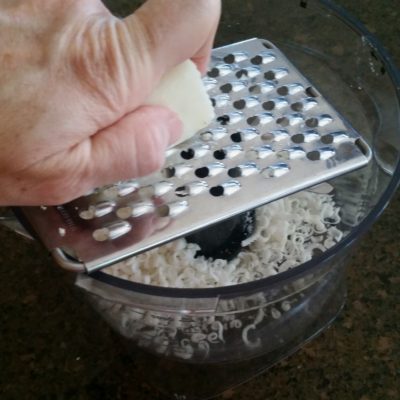
20160427_085154-01


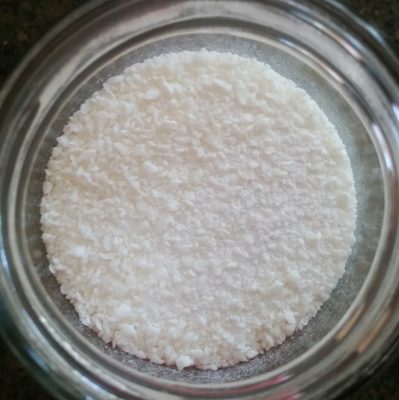
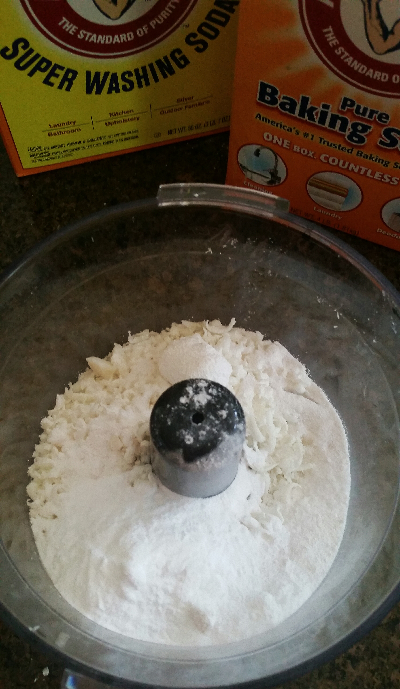
Step 2: Combine all ingredients in the food processor and pulse until fine powder is produced.
laundrydetergent2


To Use: 1 Tablespoon per load.

20160427_090017-01


Notes:

  1. I use a dosage cup from a children medicine bottle for ease of measuring.
  2. This is safe for high efficiency machines.
  3. If it is a particularly stinky load (technicals or towels), I will add a 1/4 cup baking soda directly in the wash basin and 1/4 cup white vinegar in the fabric softener basin.


Click image to save to Pinterest

laundrydetergent


Where I found my information:

https://www.pg.com/productsafety/ingredients/household_care/laundary_fabric_care/Tide/Ultra_Tide_Powdered_Detergent_Original.pdf
http://www.ewg.org/guides/cleaners/1809-TideUltraPowderDetergentOriginal
http://www.ewg.org/guides/substance_groups/42
http://www.ewg.org/guides/substance_groups/184
http://www.ewg.org/guides/substances/5654
http://www.ewg.org/guides/substances/5426
http://www.ewg.org/guides/substances/151906
http://www.ewg.org/guides/substance_groups/230
http://www.bio-world.com/msds/41600044/PEG-Polyethylene-glycol.html
http://www.ewg.org/guides/substances/2290
http://www.ewg.org/guides/substances/12483
http://www.ewg.org/guides/substance_groups/68
http://www.ewg.org/guides/substances/5426
http://www.ewg.org/guides/cleaners/441-FelsNapthaHeavyDutyLaundryBarSoap
http://www.ewg.org/guides/cleaners/2507-20MuleTeamBoraxNaturalLaundryBoosterMultiPurposeHouseholdCleaner


 

DIY Wall Art

A few weeks ago, I shared with you how I re-used old curtains in my little girl’s room. Well, part of the remodel of her room included adding some artwork to her walls. I love being able to make my own artwork. It saves quite a bit of money, and I have the pride and satisfaction of knowing I made it myself.

My daughter’s name means “Bright Light,” so of course I wanted to incorporate the lyrics of “You are My Sunshine” into the art. I love when people create artwork that is hand-painted words, but I do not possess this talent. So here is how I “cheated” to make this artwork look like it wasn’t done by a three year old.


sunshinecomplete

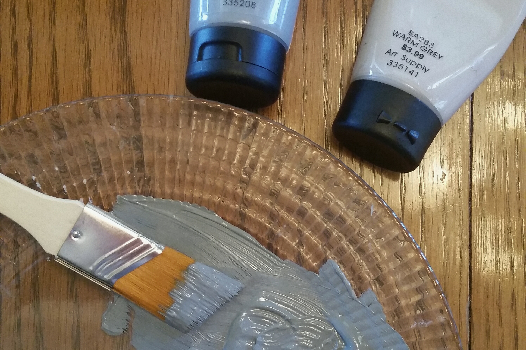
First, I found a set of canvas panels at Hobby Lobby and I bought some acrylic paints.

sunshinepaint

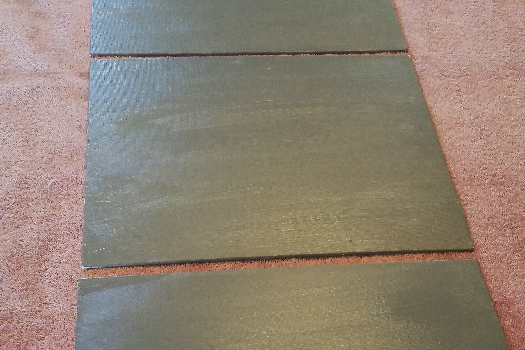
I thought I wanted grey for the background, but then decided it was too dark.
That is the beauty of paint! Just cover it up with a different color.

sunshinepanels

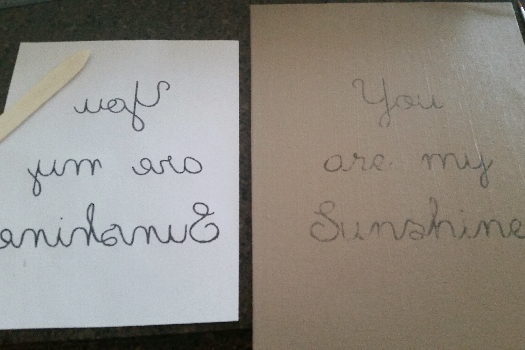
Here is the “cheating” part. Find a font you like, type out your words, and print it reversed. Then take a soft-lead pencil and heavily trace over the print out. Lay print text side down over canvas, and rub the back of the paper with a blunt object. I used a bone folder, but a spoon would work just as well. Voila! You have just done a graphite transfer.

sunshinetransfer

Then, just simply paint over the transfer. I added some daisies for fun, too!
Put them in frames (if you want) and hang them up!

sunshineindividual

Do you want to try this at some point? Pin it!

 Pin-DIY-WallArt

Simple Homemade Toothpaste

I worked as a dental hygienist for 15 years. And I have got to tell you, ever since I’ve started using this homemade toothpaste, my teeth have never felt so clean.

I’m going to share with you my toothpaste recipe, but first I’m going to bore load you up with a bunch of information. Why would I do that? Because I think you can handle the truth. And I think knowledge is power (although ignorance is bliss). And I want you to be healthy and to save money!


toothpastetitle


You may be wondering, “What’s wrong with store bought toothpaste?”

Several of the ingredients are questionable. And some are just not necessary. They are added to make it smooth, or make is sudsy, or make it a pretty color. There is no therapeutic value.

Fluoride is the only active ingredient in toothpaste and it’s the only required ingredient for toothpaste to receive the ADA seal. As a dental hygienist I’m torn on this one. I’ve seen improvement in people’s teeth (less decay and sensitivity) from using prescription strength fluoride at home, and administering it in the office. As an individual that does not like things being forced on me, I think water fluoridation is wrong. And kind of creepy, actually. As an individual that is continually striving to learn and to be healthier, the risks of fluoride being a carcinogen and having negative effects on our neurological health greatly concern me. Ok, enough about that…

Now let’s look at the inactive ingredients in the two top selling brands.

Colgate Total

  • Hydrated Silica: An abrasive to clean the teeth and give toothpaste a smooth consistency.
  • Glycerin: A humectant, solvent, and sweetener.
  • Sorbitol: A sugar substitute that can be used as a laxative, humectant, and thickener.
    It may aggravate IBS.
  • PVM/MA Copolymer (Polyvinyl methyl ether/maleic acid): A binder.
  • Sodium Lauryl Sulfate: A foaming agent.
    Possibly carcinogenic to humans. May also cause negative effects in the kidneys, liver, and central nervous system.
  • Cellulose gum: A thickener and emulsifier.
  • Flavor: (Good luck trying to figure out what they actually use to flavor that flavor.)
  • Sodium Hydroxide: Another name for lye. Used to neutralize the pH of the other ingredients.
  • Carrageenan:  A thickener and stabilizer.
    It has been linked to inflammation, gut irritation, and cancer.
  • Propylene Glycol: A humectant, solvent, and preservative.
    May be linked to allergic reactions in patients with eczema and other skin allergies.
  • Sodium Saccharin: An artificial sweetener. At one time it was thought to be carcinogenic, but further studies have disproven this.
    It may, however, cause allergic reactions, increase risk for developing diabetes, and contribute to weight gain.
  • Titanium Dioxide: A whitener used to prevent discoloration.
    Is a possible carcinogen and can be harmful to the brain.


Crest ProHealth Inactive Ingredients

  • Glycerin: same as above
  • Hydrated Silica: same as above
  • Sodium Hexametaphosphate: A corrosion inhibitor.
    Has been shown to cause skin irritations.
  • Propylene Glycol: same as above
  • PEG 6: A binder and humectant.
    Has not shown to be carcinogenic in of itself. The problem is that it makes other questionable ingredients more easily absorbed into the body.
  • Zinc Lactate: Used to prevent plaque formation and gingivitis.
  • Trisodium Phosphate: A chemical found in cleaning products.
    (I guess if your teeth are really dirty…? All these chemicals are getting old.)
  • Flavor: same as above
  • Sodium Lauryl Sulfate: same as above.
  • Sodium Gluconate: Used as a stabilizer when cleaning metals.
    (Good grief. This is maddening. Are you still with me?)
  • Carrageenan: same as above
  • Sodium Saccharin: same as above
  • Polyethylene: Plastic. Just plain old plastic.
    (Why?? I’m so angry. I don’t want to finish.)
  • Xanthan Gum: A thickener and emulsifier.
  • Mica: Used as an abrasive.
    (This mineral is also used when filling cracks in drywall. I’m becoming delirious now.)
  • Titanium Dioxide: same as above
  • Blue 1: (Because what’s one more chemical?)


Were you able to follow along? Are you angry? Depressed? Don’t really care, because you really like the taste of that blue plastic toothpaste?

Now let me talk about the ingredients I use in this simple homemade toothpaste.

  • Coconut oil: Prohibits growth of bacteria.
  • Baking soda: Mild abrasive.
  • Essential oil: I prefer to use peppermint. For the children I use spearmint since it is safe for them. (Please do research on what essential oils you use!)
  • Xylitol: This is a wonderful natural sweetener. I use this in the children’s toothpaste to make it sweeter. Here’s my simple-dental-hygienist way of explaining sugar, cavities, and xylitol:

The bacteria in your mouth eat the same sugars you do. Then they metabolize it, meaning they poop. This bacteria by-product is an acid that can burn a hole in your tooth. This is a cavity. But when the bacteria eats the xylitol, they can’t metabolize it. They get constipated. And then they die. Yay!


Simple Homemade Toothpaste

Ingredients and costs

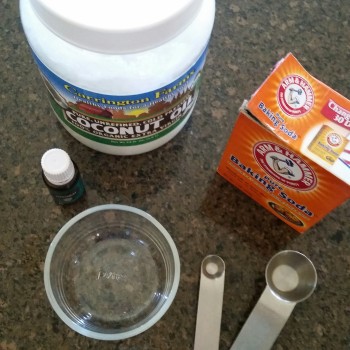
  • 1 Tb coconut oil $0.14
  • 1 Tb baking soda $0.01
  • 5 drops essential oil $0.25 (price depends on what oil you use)
  • 1/4 tsp xylitol (optional)

Total: $0.40 per ounce
(Colgate Total is $0.41 per ounce and Crest ProHealth is $0.98 per ounce at Walmart)

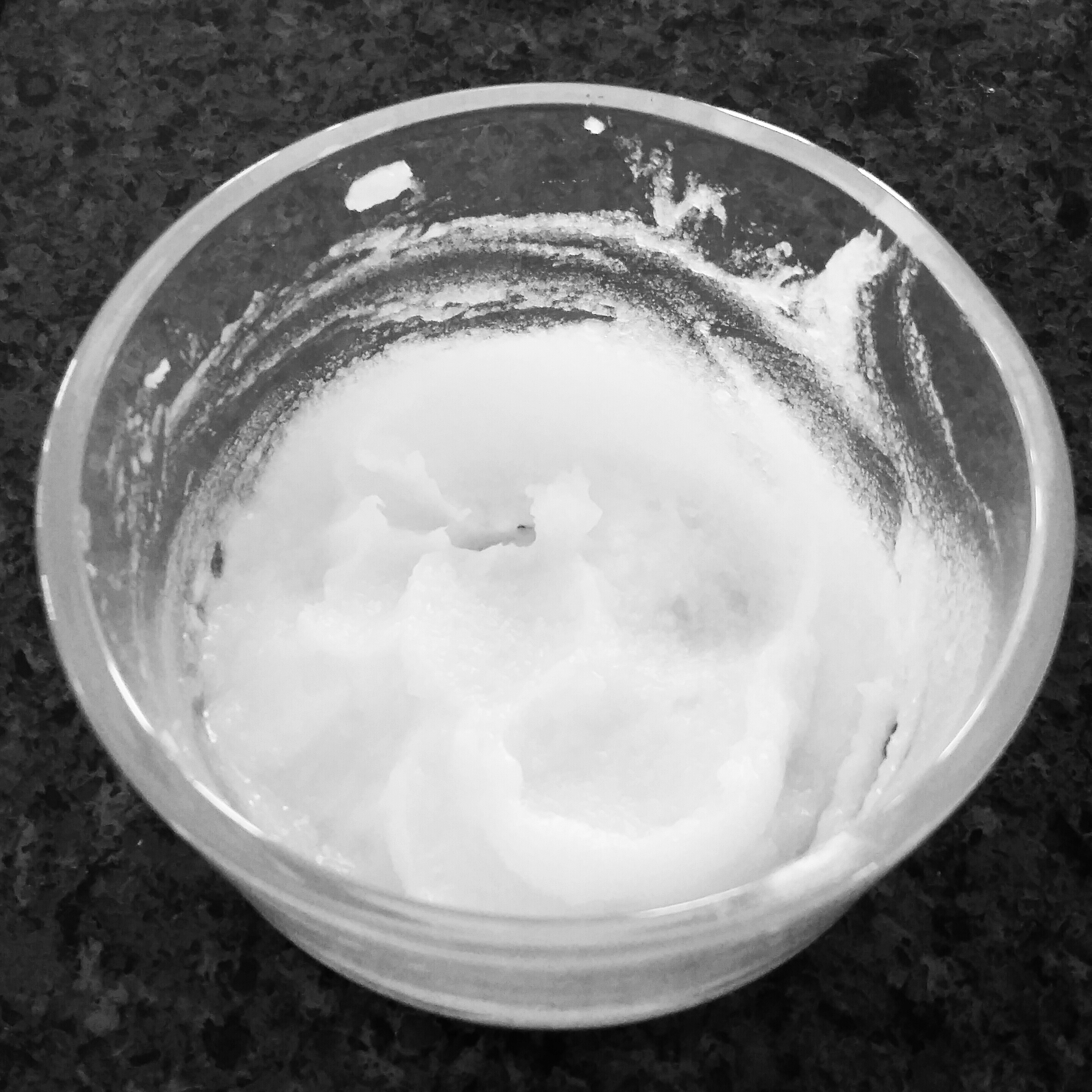
toothpaste1

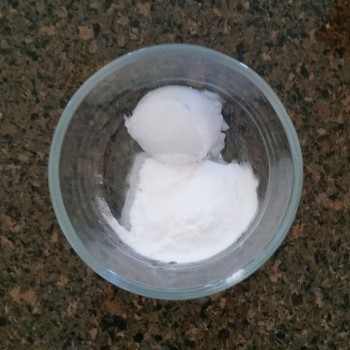
If you are using the xylitol, and it’s not in powder form, you will need to melt it in 1/4 tsp water first. Simply place xylitol and water in glass dish in the microwave for 15 seconds. Then add remaining ingredients and stir. Based on your preference, you may want to adjust the amount of ingredients.

toothpaste2


toothpaste3

Notes:

  • I make small batches so it does not get dried out.
  • I keep the toothpaste in small glass jars (with a lid) and dip it out with the toothbrush.
  • Yes, it tastes salty.
  • Yes, my children use it, as well (after complaining a couple times).

Yay for clean teeth!!


Here is where I found my information:

www.cancer.org/cancer/cancercauses/othercarcinogens/athome/water-fluoridation-and-cancer-risk
www.hsph.harvard.edu/news/features/fluoride-childrens-health-grandjean-choi/ www.practicalgastro.com/pdf/November10/ErfaniArticle.pdf
www.ewg.org/skindeep/ingredient/705417/PVM%3B%3B_MA_COPOLYMER/
articles.mercola.com/sites/articles/archive/2010/07/13/sodium-lauryl-sulfate.aspx
www.healthline.com/health/food-nutrition/cellulose-gum
www.prevention.com/food/healthy-eating-tips/carrageenan-natural-ingredient-you-should-ban-your-diet www.ewg.org/skindeep/ingredient/705315/PROPYLENE_GLYCOL/
www.latimes.com/science/la-sci-dietsoda11feb11-story.html
www.ncbi.nlm.nih.gov/pubmed/2202324
articles.mercola.com/sites/articles/archive/2016/01/20/titanium-dioxide-nanoparticles-health-risks.aspx
www.truthinaging.com/review/what-is-it-pegs
www.ncbi.nlm.nih.gov/pubmed/11800050
www.ncbi.nlm.nih.gov/pubmed/11766135
www.webmd.com/vitamins-supplements/ingredientmono-982-zinc.aspx?activeingredientid=982
pubchem.ncbi.nlm.nih.gov/compound/Sodium_D-gluconate#section=Top
www.britannica.com/science/polyethylene
articles.mercola.com/sites/articles/archive/2015/04/25/coconut-oil-toothpaste.aspx
Proudly powered by Wpopal.com